Morgan Washington · 14 October 2026
Oral Historians Build Digital Repositories of Elders' Hearthside Family Traditions
Expanding Digital Collections Document Hearth Traditions
Researchers at multiple institutions have begun systematic efforts to record elders' accounts of daily rituals centered on family fireplaces, and these interviews now feed into growing online archives that scholars and the public can access remotely. Data from the Library of Congress indicates that oral history holdings related to domestic customs increased by 18 percent between 2023 and 2025, while similar growth appears in regional repositories across North America and Europe.
Interviews typically explore routines such as evening storytelling circles, seasonal wood-gathering practices, adn the transmission of cooking techniques that relied on open hearths or early stoves. Archivists note that participants often describe how the physical arrangement of seating around the fire influenced family communication patterns and the passing of local knowledge from one generation to the next.
Methods Employed by Field Interviewers
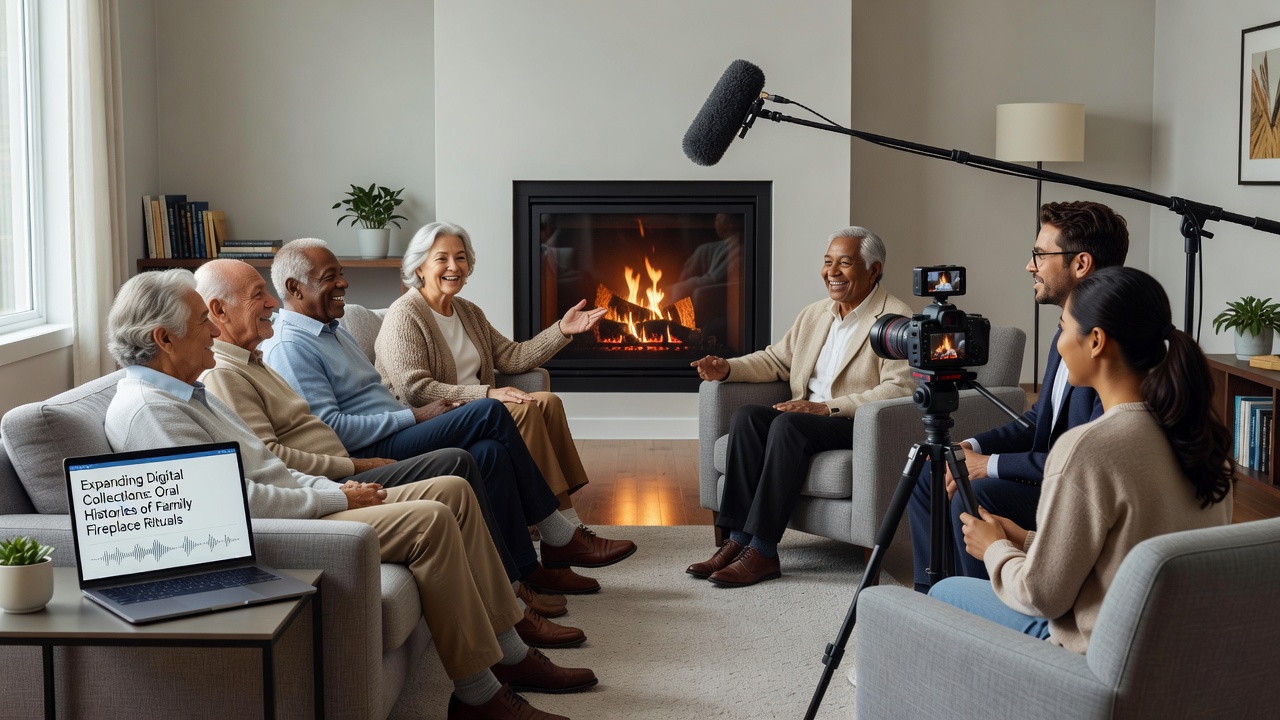
Oral historians prepare structured yet flexible question guides that allow elders to recount specific memories without leading prompts. Sessions occur in participants' homes or community centers, and recordings capture not only spoken words but also descriptions of objects such as fire tools, mantels, and surrounding furniture that remain in place. Transcripts undergo review by both the narrator and project linguists before digitization, which ensures accuracy in dialect and terminology.
Equipment choices include high-fidelity audio devices alongside supplementary video when elders consent to visual documentation of gestures that accompany their narratives. Metadata standards developed by the Oral History Association guide the tagging of each file so that searches for terms like "hearth gathering" or "fireplace evening" retrieve relevant segments quickly.
October 2026 Milestones in Archive Growth
Project timelines released by several university-based oral history centers list October 2026 as the target month for the next major upload wave. That release will incorporate approximately 240 new interviews collected from elders in rural and suburban communities across the United States and Canada. Figures released by the Canadian Museum of History show parallel efforts underway in provinces where similar hearth-centered customs persisted into the late twentieth century.
These additions will expand keyword-searchable collections that already contain accounts from the American South, the Midwest, and parts of New England. Cross-referencing tools now under development will allow users to compare descriptions of ritual foods prepared over open flames with parallel records from European archives.

Access and Preservation Standards
Once interviews receive final approval, files move to secure servers that employ redundant backups and regular integrity checks. Access portals require users to agree to citation guidelines that credit both the narrator and the collecting institution. Several collections also offer excerpts formatted for classroom use, complete with discussion prompts tied to social-history curricula.
Long-term preservation plans include migration of formats every five to seven years, a schedule recommended by the International Council on Archives. Funding for these steps comes from a combination of federal grants, university endowments, and private foundations that focus on intangible cultural heritage.
Geographic Reach of Current Projects
Teams operating in the Pacific Northwest have documented accounts from elders whose families maintained wood-burning stoves well into the 1990s. Meanwhile, researchers affiliated with Australian national libraries have begun parallel recordings that describe hearth practices brought by nineteenth-century settlers and later adapted to local timber resources. Comparative studies now underway examine how climate, available fuels, and household size shaped the frequency and duration of fireside gatherings.
One collaborative database hosted by a European university consortium links North American interviews with Scandinavian and Alpine records, revealing recurring motifs such as the placement of protective iron screens or the timing of ash removal rituals. These connections emerge only after standardized metadata fields allow cross-collection queries.
Conclusion
Digital collections that preserve elders' recollections of family fireplace rituals continue to grow through coordinated oral history programs. October 2026 uploads will add hundreds of new accounts, and established preservation protocols ensure these materials remain available for future researchers. Ongoing work across multiple continents demonstrates how structured interviewing combined with careful digitization can safeguard domestic traditions that once existed primarily in memory and physical practice.